


The moment of EHR go-live is a pivotal point for any healthcare organization. It’s the culmination of months, sometimes years, of planning, training, and configuration. But beneath the anticipation lies a significant challenge: how do you ensure that all systems are truly ready, that staff are prepared, and that patient care remains uninterrupted? An unsuccessful go-live can lead to significant workflow disruptions, clinician burnout, and even compromised patient safety. The stakes are incredibly high.
Many practices face similar hurdles: data migration complexities, user adoption resistance, and technical glitches that surface only under live conditions. Navigating these requires more than just technical expertise; it demands a strategic, methodical approach to readiness and deployment. That’s precisely what we aim to address, drawing on the collective wisdom and practical experience fostered here at The HIT Community.
For organizations considering a major platform shift or looking to optimize their current system, understanding the nuances of implementation, particularly with comprehensive systems like Epic, is crucial. You’ll find extensive resources and discussions on critical aspects like interoperability and workflow optimization on Epic EHR system features and best practices.
What is a Go-No-Go Checklist for EHR Deployment?
A go-no-go checklist is a critical decision-making tool used just before an EHR system’s official launch. It systematically evaluates whether all pre-defined criteria for a successful deployment have been met. This checklist helps leadership determine if the organization is truly ready to “go live” or if vital elements are missing, warranting a “no-go” decision and a delay.
This checklist isn’t merely a formality; it’s a strategic checkpoint. It aggregates findings from testing, training, data migration, and infrastructure validation, providing a clear snapshot of organizational readiness. A structured go-no-go process reduces the risk of post-implementation chaos, ensuring that the heavy investment in a new EHR system delivers its intended benefits from day one. In our practice, we’ve seen that skipping this crucial step often leads to significant operational headaches down the line.
“The go-no-go decision is perhaps the most critical checkpoint in any major health IT implementation. It forces a comprehensive review of preparedness, preventing preventable failures and protecting patient care.”
— Office of the National Coordinator for Health Information Technology (ONC)
What Are the Essential Steps for Successful EHR Implementation?
Successful EHR implementation typically involves several phases: planning, system selection, design and build, testing, training, go-live, and post-live support. Each phase is interconnected, building upon the last, with thoroughness in one directly impacting the success of subsequent stages. Skipping or rushing a phase introduces considerable risk to the entire project.
The complexity demands a methodical approach. From defining project scope and assembling a dedicated team to rigorous testing in EHR sandboxes and developing role-specific microlearning videos for training, every step must be meticulously executed. Robert Claudio, our primary content creator, has highlighted through numerous case studies that success hinges on robust preparation and continuous engagement from all stakeholders.
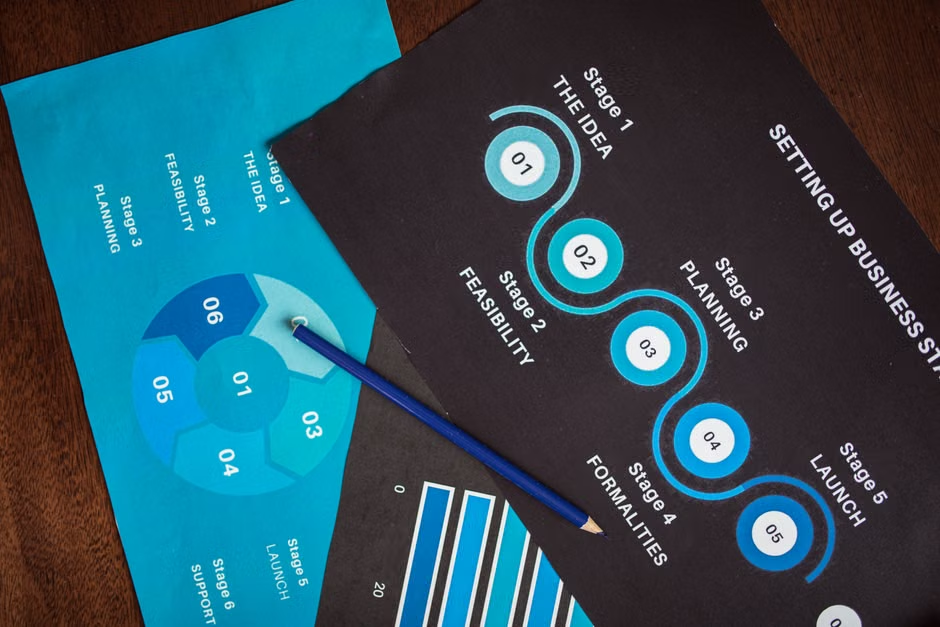
Key Phases of Implementation:
- Project Planning & Scoping: Define clear goals, establish a project governance structure, and allocate resources. This includes assembling super-users and subject matter experts who will be vital throughout the process.
- Vendor Selection: Choose an EHR that aligns with your clinical workflows, organizational size, and strategic objectives. Consider factors like interoperability with existing systems and patient engagement features.
- System Design & Build: Customize the chosen EHR to match your specific workflows. This involves configuring templates, forms, and clinical decision support tools.
- Data Migration: Strategically transfer patient demographic data, clinical history, and billing information from legacy systems to the new EHR. This is often the most technically challenging phase.
- Testing & Validation: Conduct comprehensive unit testing, integrated testing, and user acceptance testing (UAT) in a simulated environment to identify and resolve issues before go-live.
- Training & Education: Provide extensive, role-specific training for all users. Our experience shows that 2-day bootcamps combined with microlearning modules significantly reduce learning curves.
- Go-Live & Support: Execute the deployment plan and provide robust at-the-elbow and remote troubleshooting support during the initial weeks.
- Post-Live Optimization: Continuously monitor system performance, gather user feedback, and make iterative improvements to workflows and configurations. This is where tech huddles become invaluable.
What Does a Go-Live Readiness Checklist Involve?
A comprehensive go-live readiness checklist encompasses several domains, ensuring that technology, people, and processes are all aligned for the transition. It involves evaluating system performance, staff training completion rates, data integrity, and the robustness of your support infrastructure. A “go” decision rests on satisfactory performance across all these key areas.

Key Indicators of Go-Live Readiness:
- Technical Readiness:
- EHR system fully built, configured, and tested in a production-like environment.
- All necessary hardware (workstations, scanners, printers) installed and functioning.
- Network infrastructure verified for speed and reliability.
- Interfaces to labs, pharmacies, and other external systems fully tested and operational.
- Robust data backup and recovery plans in place.
- People Readiness:
- All staff (clinical, administrative, IT) have completed required training modules.
- Super-users are identified, trained, and ready to provide peer support.
- Helpdesk staff are fully trained on common issues and escalation protocols.
- Clear communication plan for go-live day and subsequent weeks.
- Process Readiness:
- New workflows documented, understood, and practiced by relevant teams.
- Contingency plans for system downtime or unexpected issues are established.
- Patient communication strategies developed for potential delays or changes.
- Clinical documentation tools, like Nuance for automated documentation, are integrated and tested.
- Data Readiness:
- Critical historical data successfully migrated and validated.
- Data integrity checks confirm accuracy and completeness.
- Patient portal data is accurate and accessible.
Navigating Common EHR Implementation Challenges
Even with meticulous planning, EHR implementations face hurdles. Common challenges include resistance to change from staff, unexpected technical issues, data migration complexities, and maintaining productivity during the transition. Recognizing these challenges early allows for proactive strategies, potentially involving phased rollouts or robust change management initiatives.
Sometimes, the “no-go” decision is the right one. Our advisory board, including leaders like Karen Bell, often emphasizes that pushing forward with known significant deficiencies is riskier than a strategic delay. For example, if user acceptance testing reveals widespread workflow failures, or if critical data migration is incomplete, it’s better to postpone. Alternatively, a “big bang” approach might be too disruptive for smaller practices, making a phased rollout more suitable. The HIT Community continually shares insights and lessons learned from various organizations that have faced these decisions, offering perspectives on how to weigh the risks and benefits.
“Resistance to change is a human, not a technical, problem. Successful EHR adoption hinges on engaging clinicians early, understanding their pain points, and demonstrating how the new system improves care, not just adds to documentation burden.”
— National Library of Medicine (PubMed) – A study on EHR implementation success factors
Realistic Expectations for Post-Go-Live
The period immediately following go-live is often characterized by a temporary dip in productivity as staff adapt to new workflows and systems. This “productivity curve” is normal; anticipate a few weeks, sometimes months, for full efficiency to return. We’ve seen that consistent, visible support, like at-the-elbow assistance and dedicated helpdesks, helps accelerate this recovery. For instance, strong remote troubleshooting with screen-sharing often resolves 80% of tickets immediately, minimizing downtime.

Focus on incremental improvements. Metrics like error reduction (e.g., aiming for a 30 percent reduction in medication errors post-implementation) or improved no-show rates (our Doxy.me implementations have shown a 40% reduction) should be tracked over time. Celebrate small victories and use tech huddles to address emerging issues and continuously refine the system and workflows.
Practical Tips for a Smoother EHR Go-Live
Preparing for an EHR go-live isn’t just about checking boxes; it’s about fostering an environment of readiness and resilience. These practical tips, drawn from years of observing successful deployments, can make a tangible difference:
- Over-Communicate Relentlessly: Start early, communicate often, and use multiple channels. Ensure everyone knows what to expect, when, and why. Transparency builds trust and reduces anxiety.
- Identify and Empower Super-Users: Select enthusiastic, tech-savvy staff who can become on-site champions. Train them extensively, making them a primary resource for their peers, reducing pressure on central IT support.
- Conduct Realistic Dress Rehearsals: Simulate real patient scenarios from start to finish. This uncovers workflow gaps and technical glitches in a low-stakes environment, allowing for adjustments before the actual go-live.
- Plan for Productivity Dips: Adjust patient schedules, bring in temporary staff, or cross-train teams to manage reduced efficiency during the initial weeks. Acknowledge that things will be slower before they get faster.
- Establish a Visible Command Center: During go-live, a central command center (physical or virtual) provides a focal point for problem resolution. Staff know exactly where to report issues and get immediate help.
- Prioritize Post-Go-Live Support: Don’t just “cut over” and walk away. Provide robust at-the-elbow support, a dedicated helpdesk, and easy access to FAQs and troubleshooting guides. Continuous support, like the 24/7 helpdesk architectures we advocate, is non-negotiable.
A successful EHR go-live isn’t the finish line, but rather the starting gun for a new phase of enhanced patient care and operational efficiency. By prioritizing meticulous planning, comprehensive training, and robust support, healthcare organizations can navigate this complex transition with confidence, transforming potential challenges into opportunities for growth and improved outcomes. It’s about building a foundation for continuous improvement, leveraging technology to truly elevate healthcare delivery.